


Prusa Research Prusament rPLA Algae Pigment - 1kg
Prusa Research Prusament rPLA Algae Pigment - 1kg
- Brand: Prusa Research
- MPN: PRM-RPLA-ALG-1000
- Part #: INKPRU0003
- UPC: 859417367594
Select your store to check availability




- Brand: Prusa Research
- MPN: PRM-RPLA-ALG-1000
- Part #: INKPRU0003
- UPC: 859417367594
Features
What can you expect?
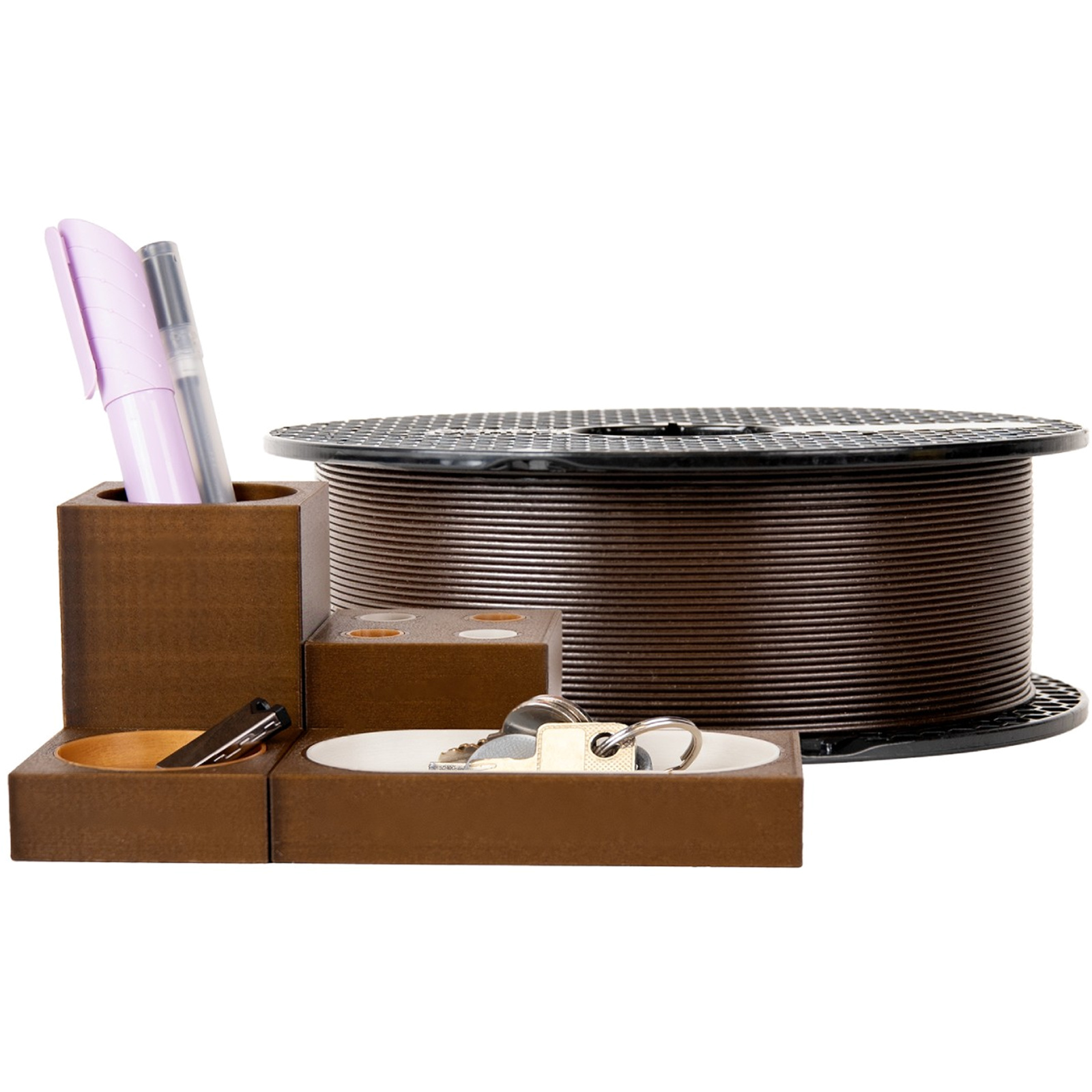
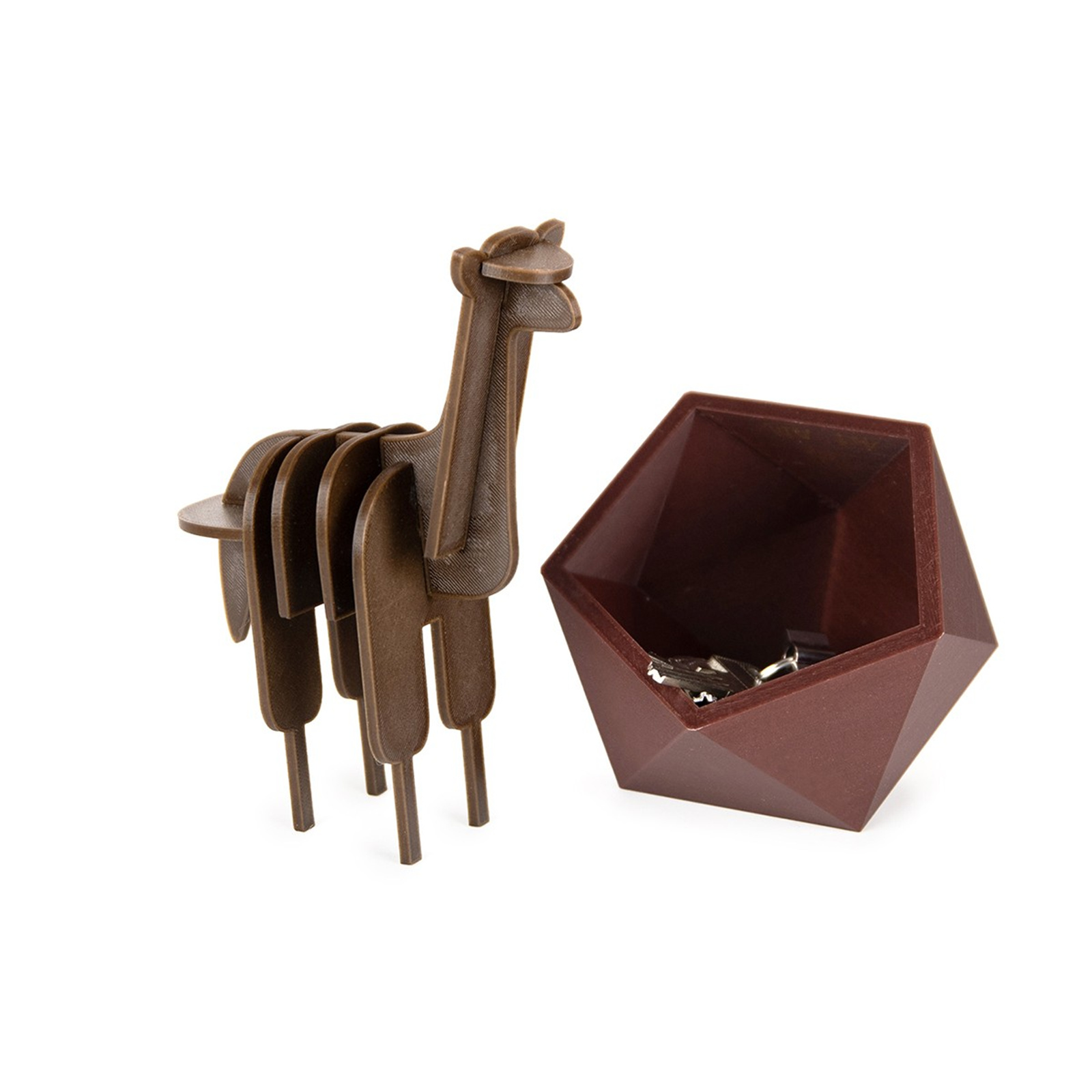
Prusament rPLA Natural Pigments is our in-house made PLA filament with ±0.03mm manufacturing tolerance and natural pigments. The filament is made of recycled PLA from industrial waste. No artificial pigments are added; the coloring of this Prusament comes from processed organic waste, resulting in a unique shade for every batch. You can inspect the parameters of every spool we made at prusament.com.
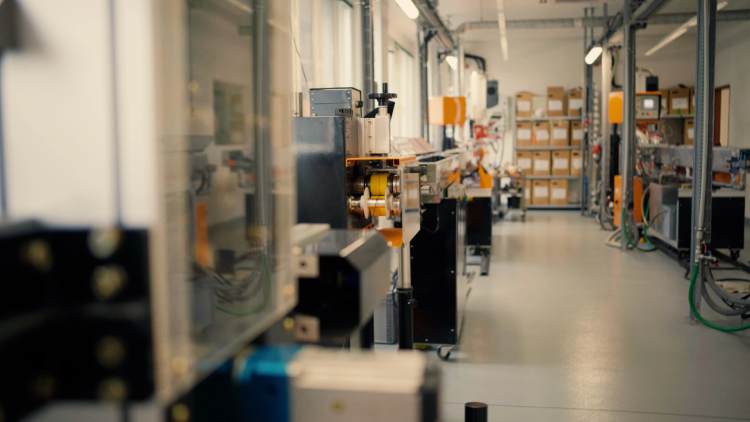
Manufactured In-House By Josef Prusa
We were not satisfied with the quality of filaments on the market. So we decided to make our own! Prusa Research is the only 3D printer manufacturer with its own filament production.
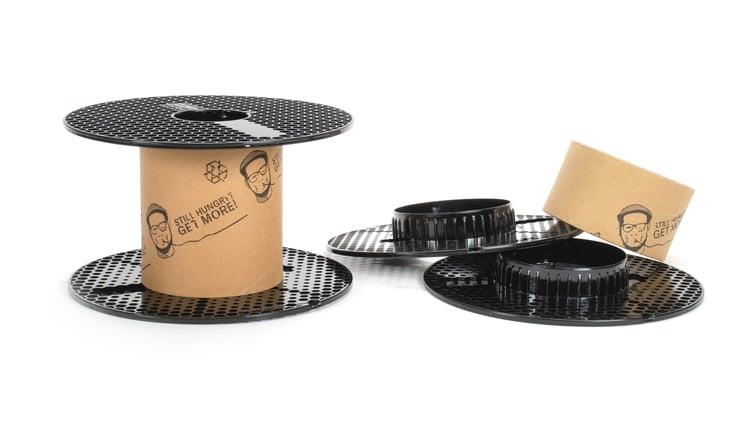
Smart spool design to save material
We are constantly improving our filament spools. The latest iteration features a core from recycled cardboard and lightweight sides from recycled polycarbonate.
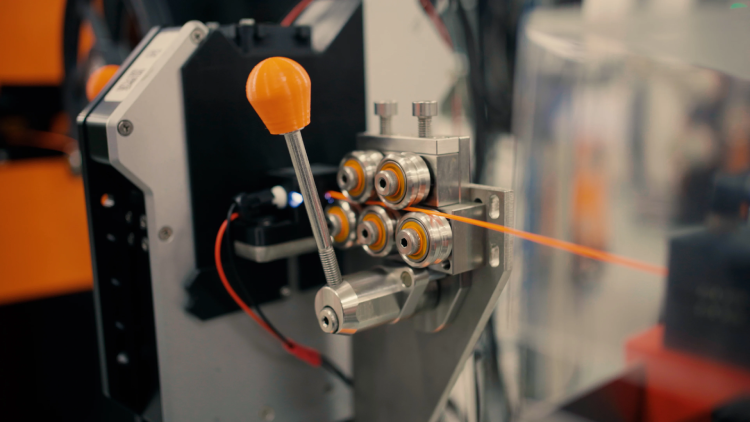
± 0.03 mm Manufacturing Guaranteed Precision
We believe the industry standard of 0.05 mm isn't sufficient for perfect 3D printing. Instead, we guarantee ±0.03mm precision.
High Quality You Can Check Yourself
With every spool, you have the unique option to inspect its manufacturing parameters yourself. Scan a QR code on the spool to see all details online (check the sample spool).
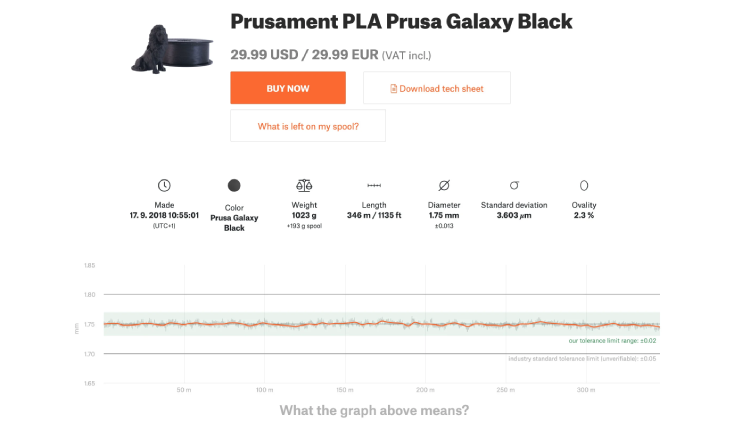
About rPLA
Prusament rPLA Natural Pigments is our own in-house recycled PLA filament with natural pigment additives. The filament is made of PLA parts manufacturing waste provided by our external supplier. No artificial pigment is added, the coloring of this Prusament comes from processed organic waste, such as red algae. The organic additives create a noticeable scent during printing.
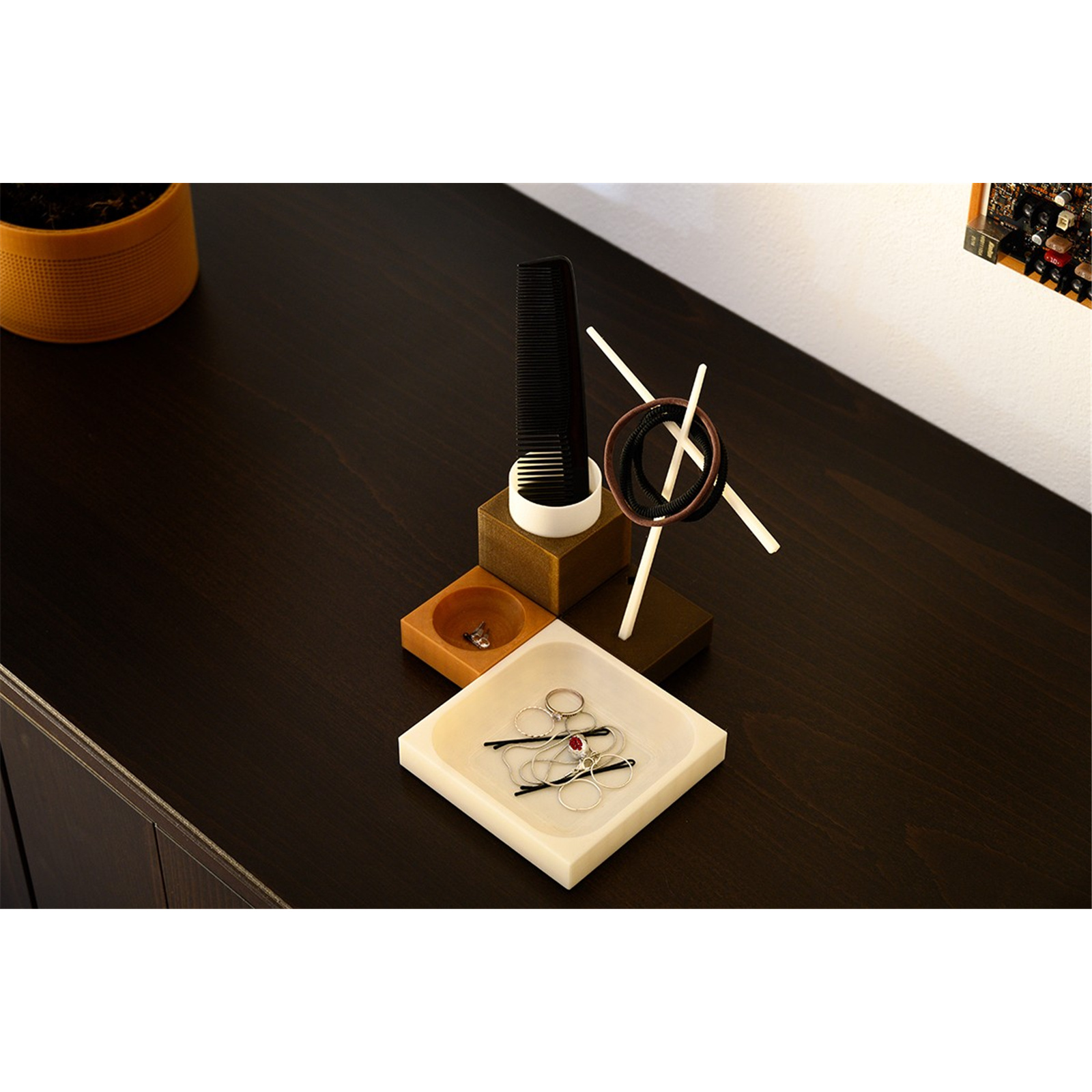
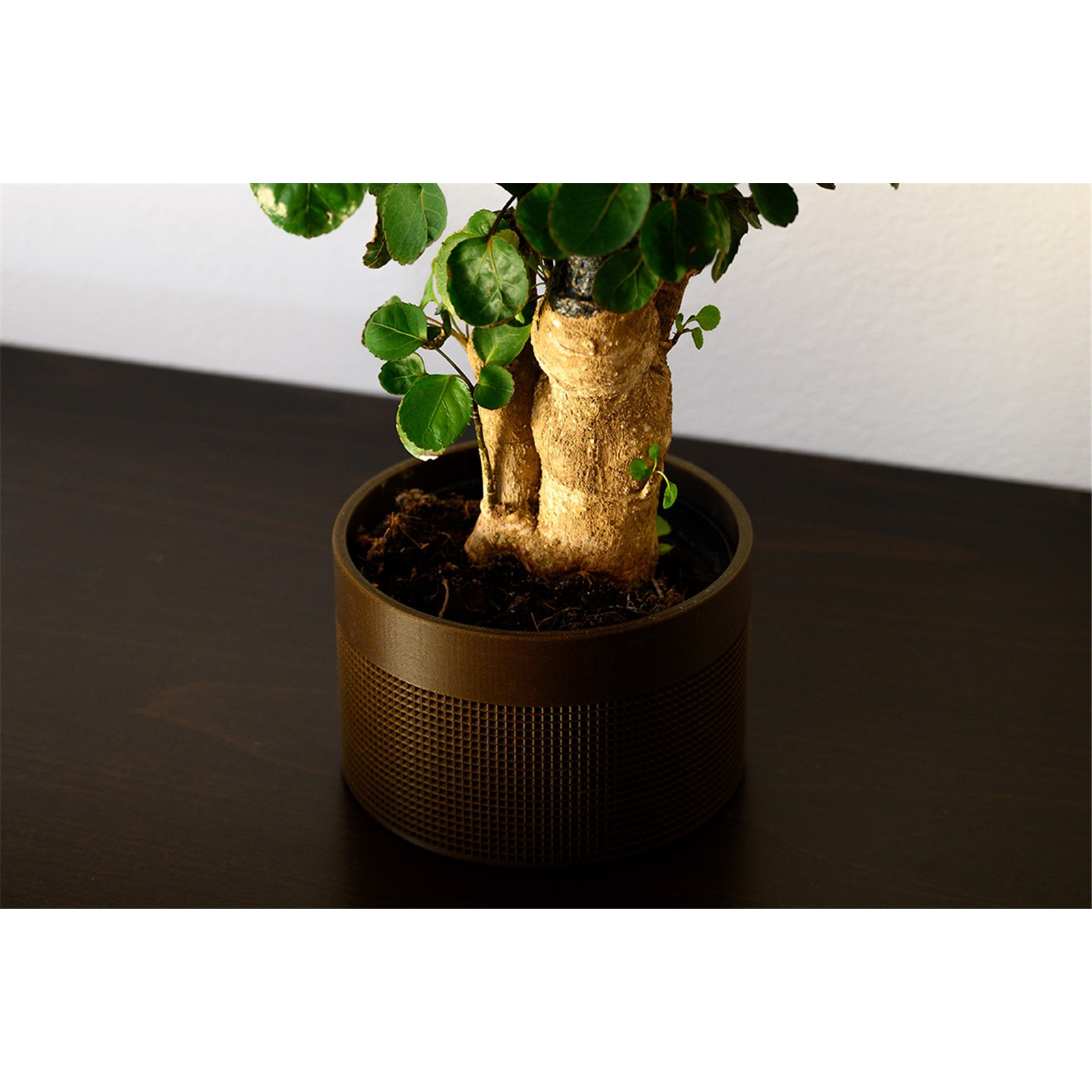
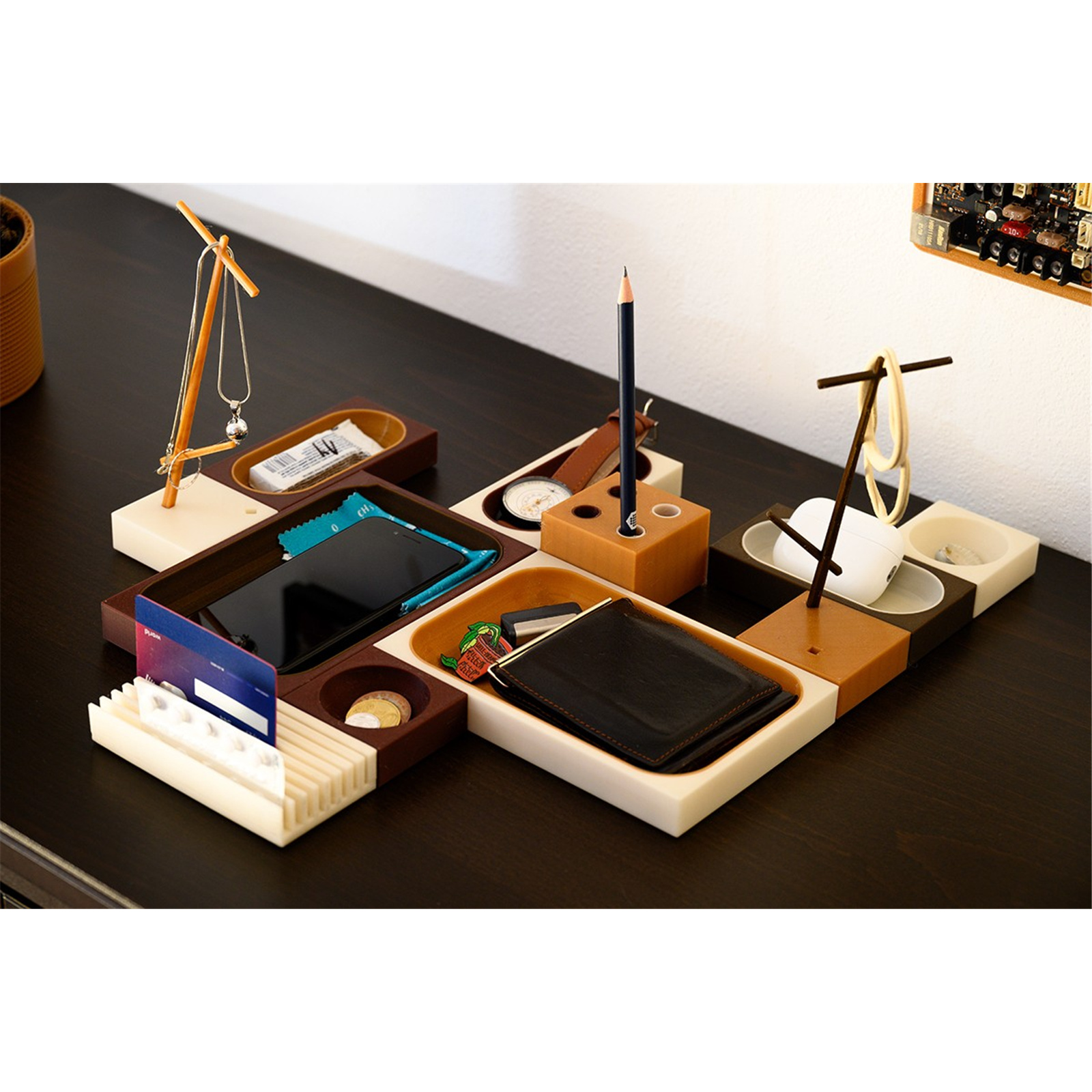
The Prusament rPLA Natural Pigments has mechanical properties similar to regular PLA, but it is slightly more brittle and hygroscopic. In general, PLA is used for various aesthetic models, prototypes, and other visual parts. With Prusament rPLA Natural Pigments, these parts can be made with significantly lower ecological impact. Last but not least, the natural pigments give rPLA pleasant subtle colors, perfectly suitable for various home decor and other aesthetic purposes.
Basic Attributes
+ Easy to print
+ Suitable for prints of any size
+ Unique, pleasant subtle colors
+ No artificial pigments added
+ Low warping
+ Eco-friendly
- Brittle
- Poor high-temperature resistance
- Colour may vary slightly depending on natural pigments
- Slightly hygroscopic (absorbs moisture)
- Noticeable (but non-toxic) smell
Beginners tips & tricks
Popular among both beginners and advanced users
PLA is the easiest-to-print filament we make. It's reliable and it doesn't require any print preparations or difficult post-processing methods. If you're new to 3D printing, it's best to start with PLA before using other materials.
Sanding
When post-processing PLA, it's better to use wet sanding. Without water you'll quickly start heating the plastic by friction, it will melt locally and deform. Also, without water, the sanding material would clog easily.
Gluing
PLA can be glued with many types of glue. We recommend using superglue for most of the parts. Certain PLA filaments may be also glued using acetone, however, it strongly depends on the various additives and colors used.
Notes
This rPLA is made in-house by Prusa Research.
1.75 mm filament is manufactured with precision of +- 0.03 mm
Before printing, make sure the surface of heatbed is clean as described in 3D Printing Handbook.
To dry the filament, please follow the instructions in our article.
Specifications
Reviews
Delivery & Pick-up

Delivery Estimates
The estimated time to ship for each product we sell is detailed on the individual product page just underneath the price. From when your items ship, products typically arrive within 1-2 working days for North Island deliveries and 2-3 working days for South Island deliveries. Rural deliveries may take an extra working day. Bulk & hazard deliveries may take an extra 2-7 working days and tracking links for these deliveries can take a few days to generate.
Next Day Delivery
Need your order in a hurry? PB Tech offers next day delivery for local Auckland addresses. Simple place your order before 4pm (provided your items are in stock) and select our next day delivery option in the checkout. T&C's apply. Learn more about Next Day Delivery.
Same Day Delivery
Need your order in a hurry? PB Tech offers same day delivery for Auckland, Hamilton, Wellington and Christchurch. Simple place your order before 1pm (provided your items are in stock) and select one of our same day delivery options 'Evening Delivery' or 'Urgent 3-hour Delivery' in the checkout. T&C's apply. Learn more about Same Day Delivery.
Shipping Costs
Shipping costs vary based on your location and the items being shipped and in some cases shipping may even be FREE.
To calculate what the shipping costs will be for your order, add the items you are interested in to your cart, view the Shopping Cart page, and select your 'Delivery Area' to calculate the shipping cost.
Shipping Security & Insurance
All orders shipped by PB Tech are sent via a courier with a signature required for each delivery. In some cases, and only where you have given the courier company permission to leave orders at a designated location, your order may be delivered without requiring a signature. All orders sent by PB Tech are fully insured in the unlikely event that your item(s) are damaged or go missing in transit.
1 Hour Store Pick-up / Click & Collect
You can pick-up your online order from any of our stores nationwide. You can select which store you want to pick up from at the checkout. Provided the store you select has stock and there's no hold-ups with payment we will have your order ready within 1 hour (during normal trading hours for that store) otherwise it may take up to 5 working days to transfer the stock to the store so your order can be fulfilled. Learn more about our Click & Collect process.
Overseas Shipments
PB Tech regularly ships overseas to Australia and beyond. If you are located in Australia, you can order directly from our Australian site www.pbtech.com/au. If you are from another country you can order from www.pbtech.com
Returns & Warranty
Popular 3D Printer Filament & Resins

 Bambu Lab PLA Basic Filament - Black 1kg - 1.75mm - Entry Level -...

 eSun PLA+ Filament - Black 1kg Roll - 1.75mm - Compatible with...

 Creality CR-PETG Filament - Black 1kg Roll - 1.75mm - Compatible...

 Creality CR-PLA Filament - Red 1kg Roll - 1.75mm - Compatible...

 Bambu Lab PETG HF Filament - Black 1kg - 1.75mm - High Speed -...


Prusa Research Prusament rPLA Algae Pigment - 1kg
- Brand: Prusa Research
- MPN: PRM-RPLA-ALG-1000
- Part #: INKPRU0003
- UPC:859417367594
Product URL: https://www.pbtech.co.nz/product/INKPRU0003/api/files/api/files/api/files/image?path=imgad/aib/BottomLeft160x300_20260209104612.png
| Branch | New Stock | On Display |
|---|---|---|
| Auckland - Albany | 3 | |
| Auckland - Glenfield | 3 | |
| Auckland - Queen Street | 3 | |
| Auckland - Auckland Uni | 0 | |
| Auckland - Westgate | 4 | |
| Auckland - Penrose | 4 | |
| Auckland - Henderson (Express) | 2 | |
| Auckland - St Lukes | 3 | |
| Auckland - Manukau | 1 | |
| Hamilton | 4 | |
| Tauranga | 2 | |
| New Plymouth | 2 | |
| Palmerston North | 3 | |
| Petone | 3 | |
| Wellington | 4 | |
| Auckland - Head Office | 7 | |
| Auckland - East Tamaki Warehouse | 0 | |
| Christchurch - Hornby | 4 | |
| Christchurch - Christchurch Central | 3 | |
| Dunedin | 3 |
Features
What can you expect?
Prusament rPLA Natural Pigments is our in-house made PLA filament with ±0.03mm manufacturing tolerance and natural pigments. The filament is made of recycled PLA from industrial waste. No artificial pigments are added; the coloring of this Prusament comes from processed organic waste, resulting in a unique shade for every batch. You can inspect the parameters of every spool we made at prusament.com.
Manufactured In-House By Josef Prusa
We were not satisfied with the quality of filaments on the market. So we decided to make our own! Prusa Research is the only 3D printer manufacturer with its own filament production.
Smart spool design to save material
We are constantly improving our filament spools. The latest iteration features a core from recycled cardboard and lightweight sides from recycled polycarbonate.
± 0.03 mm Manufacturing Guaranteed Precision
We believe the industry standard of 0.05 mm isn't sufficient for perfect 3D printing. Instead, we guarantee ±0.03mm precision.
High Quality You Can Check Yourself
With every spool, you have the unique option to inspect its manufacturing parameters yourself. Scan a QR code on the spool to see all details online (check the sample spool).
About rPLA
Prusament rPLA Natural Pigments is our own in-house recycled PLA filament with natural pigment additives. The filament is made of PLA parts manufacturing waste provided by our external supplier. No artificial pigment is added, the coloring of this Prusament comes from processed organic waste, such as red algae. The organic additives create a noticeable scent during printing.
The Prusament rPLA Natural Pigments has mechanical properties similar to regular PLA, but it is slightly more brittle and hygroscopic. In general, PLA is used for various aesthetic models, prototypes, and other visual parts. With Prusament rPLA Natural Pigments, these parts can be made with significantly lower ecological impact. Last but not least, the natural pigments give rPLA pleasant subtle colors, perfectly suitable for various home decor and other aesthetic purposes.
Basic Attributes
+ Easy to print
+ Suitable for prints of any size
+ Unique, pleasant subtle colors
+ No artificial pigments added
+ Low warping
+ Eco-friendly
- Brittle
- Poor high-temperature resistance
- Colour may vary slightly depending on natural pigments
- Slightly hygroscopic (absorbs moisture)
- Noticeable (but non-toxic) smell
Beginners tips & tricks
Popular among both beginners and advanced users
PLA is the easiest-to-print filament we make. It's reliable and it doesn't require any print preparations or difficult post-processing methods. If you're new to 3D printing, it's best to start with PLA before using other materials.
Sanding
When post-processing PLA, it's better to use wet sanding. Without water you'll quickly start heating the plastic by friction, it will melt locally and deform. Also, without water, the sanding material would clog easily.
Gluing
PLA can be glued with many types of glue. We recommend using superglue for most of the parts. Certain PLA filaments may be also glued using acetone, however, it strongly depends on the various additives and colors used.
Notes
This rPLA is made in-house by Prusa Research.
1.75 mm filament is manufactured with precision of +- 0.03 mm
Before printing, make sure the surface of heatbed is clean as described in 3D Printing Handbook.
To dry the filament, please follow the instructions in our article.
Specifications
Printing Setup
Nozzle
205 ± 10 °C
Heatbed
50 ± 10 °C
Recommended Steel Sheet
Smooth PEI / Textured / Satin
Other
Before printing, learn about print surface preparation in our dedicated article and material table.


